In today’s business environment, risk doesn’t always present itself clearly.
Most organizations rely on traditional processes—background checks, reference verifications, and surface-level reviews—to make critical decisions about hiring, partnerships, and investments. These methods are important, but they often only reveal part of the picture.
The real question is:
What are you not seeing?
The Illusion of “Complete” Information
A standard background check may confirm identity, employment history, and criminal records. On paper, everything looks clean.
But risk rarely lives on paper.
It lives in:
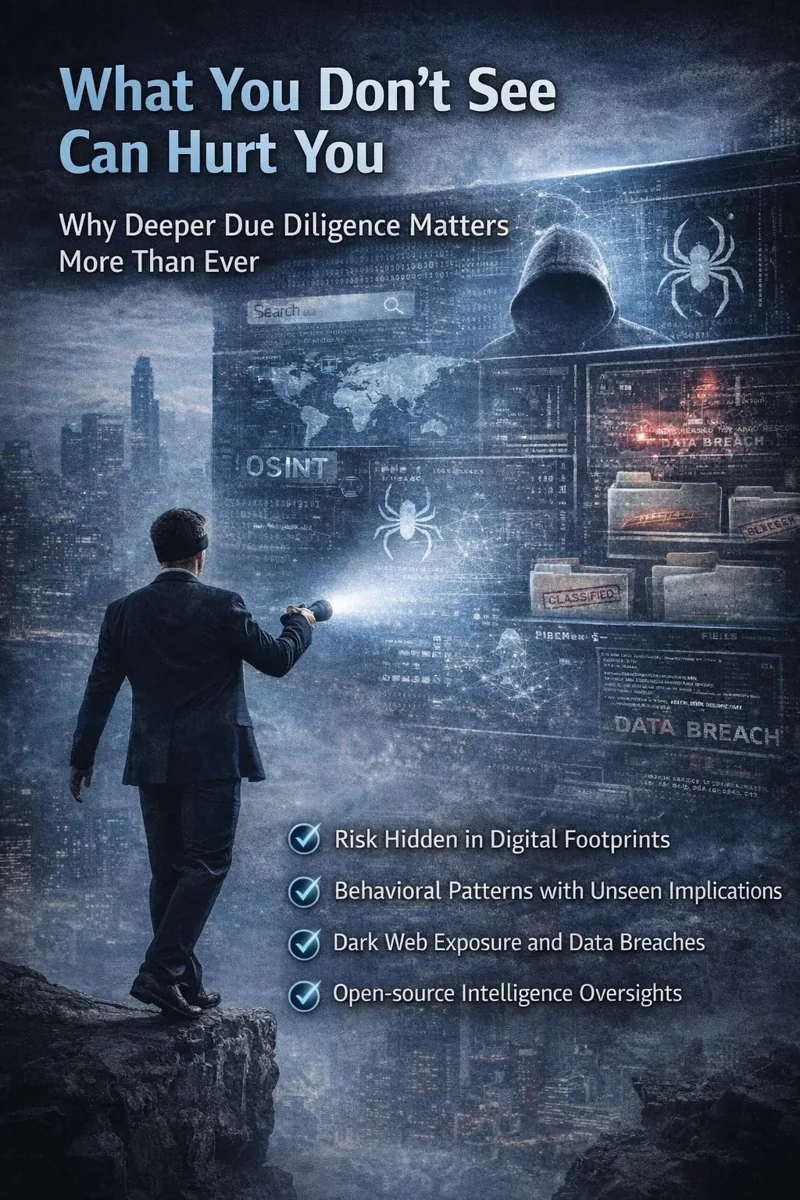
- Digital footprints across platforms
- Behavioral patterns in open-source environments
- Associations and networks not captured in formal records
- Data exposures circulating in hidden or restricted channels
Organizations that rely solely on traditional screening methods are often making decisions based on incomplete intelligence.
The Rise of Hidden Risk
As business operations become more digital, so do the risks.
Today’s threats are not limited to internal misconduct or obvious red flags. Instead, they emerge from areas such as:
1. Digital Footprint Exposure
Every individual and organization leaves a trail—social media activity, forum participation, archived content, and more. These elements can reveal insights into behavior, credibility, and potential risk indicators.
2. Open-Source Intelligence (OSINT) Gaps
Publicly available data is one of the most powerful tools for due diligence, yet it is often underutilized. When properly analyzed, OSINT can uncover inconsistencies, undisclosed affiliations, and reputational concerns.
3. Behavioral Indicators
Patterns matter. Language, timing, associations, and activity trends can signal risk long before it becomes actionable.
4. Dark Web Exposure
Compromised credentials, leaked data, or illicit activity tied to an individual or organization may never surface in traditional checks—but they exist, and they matter.
Why Traditional Screening Isn’t Enough
Traditional background checks were designed for a different era—one where information was limited, and risk was easier to identify.
That is no longer the case.
Modern risk requires:
- Multi-layered intelligence gathering
- Continuous monitoring, not one-time checks
- Integration of digital, behavioral, and contextual analysis
- A proactive—not reactive—approach
Without these elements, organizations are left exposed to risks they didn’t know existed.
From Verification to Intelligence
The shift organizations must make is simple—but critical:
Stop just verifying information. Start analyzing it.
Verification answers:
- Is this information correct?
Intelligence answers:
- What does this information actually mean?
- What is missing?
- What could this indicate about future risk?
This distinction is where true due diligence lives.
The Cost of the Unknown
Risk doesn’t always announce itself.
It builds quietly—through overlooked details, incomplete data, and assumptions made too early.
The consequences can include:
- Reputational damage
- Financial loss
- Operational disruption
- Regulatory exposure
In many cases, these outcomes stem from one core issue:
A failure to look deeper.
A Better Question to Ask
Instead of asking: “Did we complete the check?”
Organizations should be asking:
- What didn’t we uncover?
- What signals are we missing?
- What risks exist beyond the surface?
Because in today’s environment:
What you don’t know is often the greatest risk you face.
Final Thought
The landscape has changed. Risk is no longer obvious—but it is always present.
Organizations that succeed will be the ones that move beyond surface-level validation and embrace deeper, intelligence-driven due diligence.
The question isn’t whether risk exists. It’s whether you’re looking deep enough to find it.